
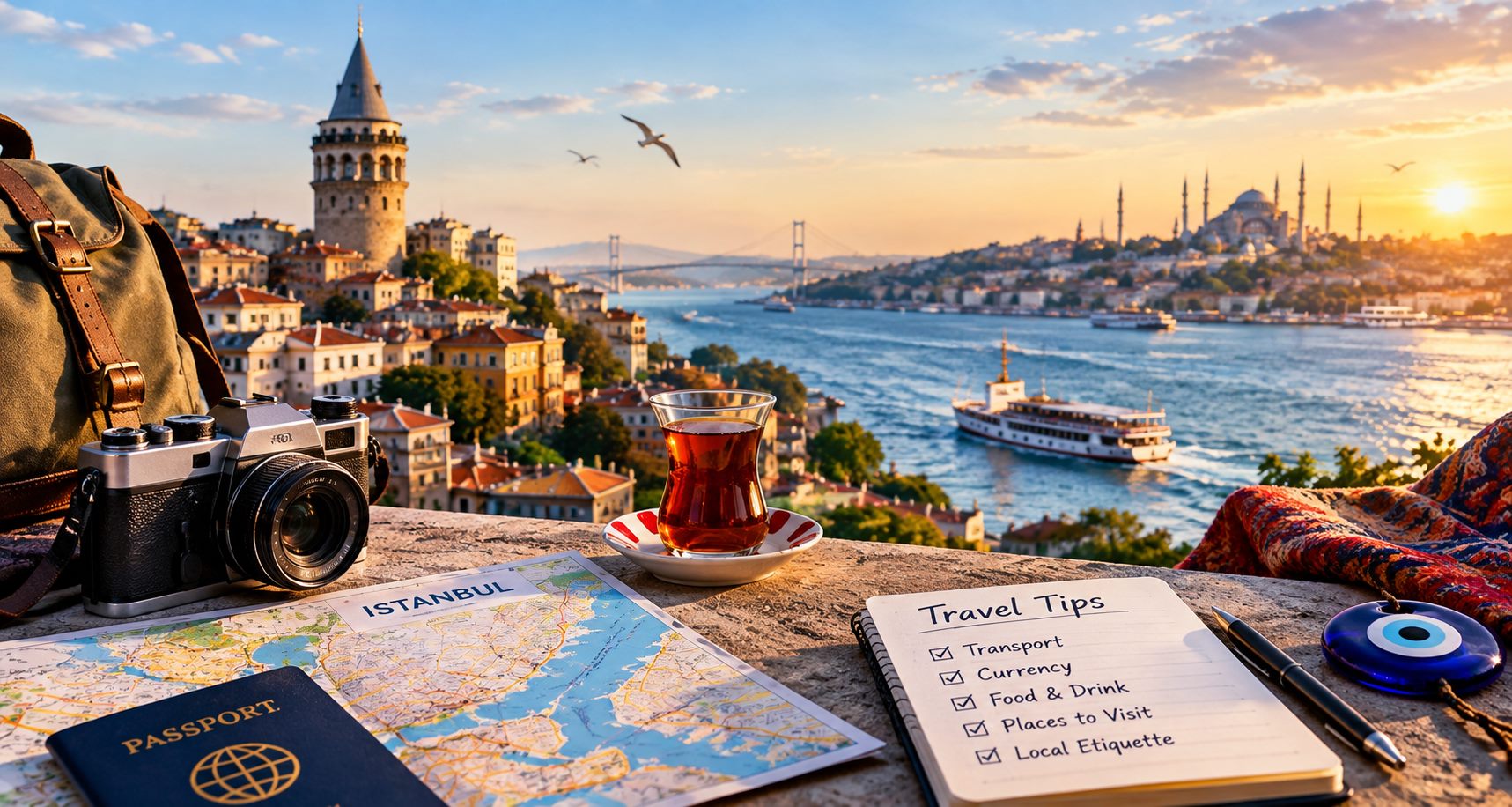
A little preparation goes a long way in Istanbul, a city large enough that a wrong assumption about distance or timing can eat up half a day. The tips below cover the practical details that trip up most first-time visitors, from money to mosque etiquette.
Turkey's currency is the Turkish lira, and while card payments are widely accepted in hotels, restaurants, and shops, it is worth carrying some cash for small vendors, taxis, and tips. ATMs are everywhere, but airport exchange counters tend to offer worse rates than banks or ATMs in the city center, so changing only a small amount at the airport and withdrawing the rest later usually works out cheaper.
Istanbul has two airports on opposite sides of the city, Istanbul Airport to the northwest and Sabiha Gokcen Airport to the southeast, and confusing the two is a common mistake since some budget airlines fly into Sabiha Gokcen while travelers assume they will land closer to the historic center. Check your ticket carefully, and factor in that a taxi or transfer from either airport into the old city can take 45 minutes to over an hour depending on traffic and time of day.
Istanbul is a modern, cosmopolitan city, and everyday dress is casual almost everywhere. The exception is mosques: shoulders and knees should be covered, and women are usually asked to bring a scarf for their hair, though most working mosques keep a supply of loaner scarves and wraps at the entrance for visitors who arrive without one. Shoes come off before entering, so plan for a pair that slip on and off easily on a day of sightseeing.
Haggling is expected in the Grand Bazaar and the Spice Bazaar, but not in fixed-price shops, supermarkets, or restaurants. A friendly, unhurried back-and-forth over price is part of the experience in the bazaars, and starting at roughly half the first quoted price is a reasonable opening move. Outside the bazaars, prices are fixed, and trying to haggle there tends to just confuse the shopkeeper.
The Hagia Sophia, Topkapi Palace, and the Basilica Cistern all draw long queues by mid-morning, especially in summer. Arriving at opening time, or visiting in the last hour before closing, cuts the wait dramatically. Friday afternoons are also worth avoiding at the Blue Mosque, since it closes to visitors during prayer times, which fall roughly midday on Fridays.
A local SIM card or e-SIM is inexpensive and widely available at the airport or in the city, and it makes navigating Istanbul's tram, ferry, and metro network far easier than relying on hotel wifi alone. Ride-hailing apps work in Istanbul too, though traffic congestion means that for a fixed price and a guaranteed pickup time, especially from the airport, many travelers prefer to book a private transfer in advance rather than search for transport after a long flight.
Comments (3)
What's the best time of day to visit places like the Blue Mosque to avoid the crowds?
Right at opening or in the final hour before closing are consistently the quietest windows, by mid-morning the queues at the major sites get long fast. Just keep in mind the Blue Mosque closes to visitors on Friday afternoons for prayers, so it's worth avoiding that slot altogether.
How much should I actually offer when bargaining at the Grand Bazaar? I don't want to insult anyone.
Starting at roughly half the first quoted price is completely normal there and won't offend anyone, it's expected as part of the process. Keep it friendly and be ready to walk away if you don't reach a price you're happy with, that alone often gets you a better offer.
Is it better to exchange cash at the airport or just use an ATM once I'm in the city?
An ATM withdrawal with a regular bank card usually works out cheaper than the airport exchange counters, which tend to offer weaker rates. Withdraw a moderate amount to cover cash-only spots like small vendors and taxis, and you can always take out more later if you need it.